KAI Scheduler Deep Dive: How NVIDIA Schedules GPUs on Kubernetes
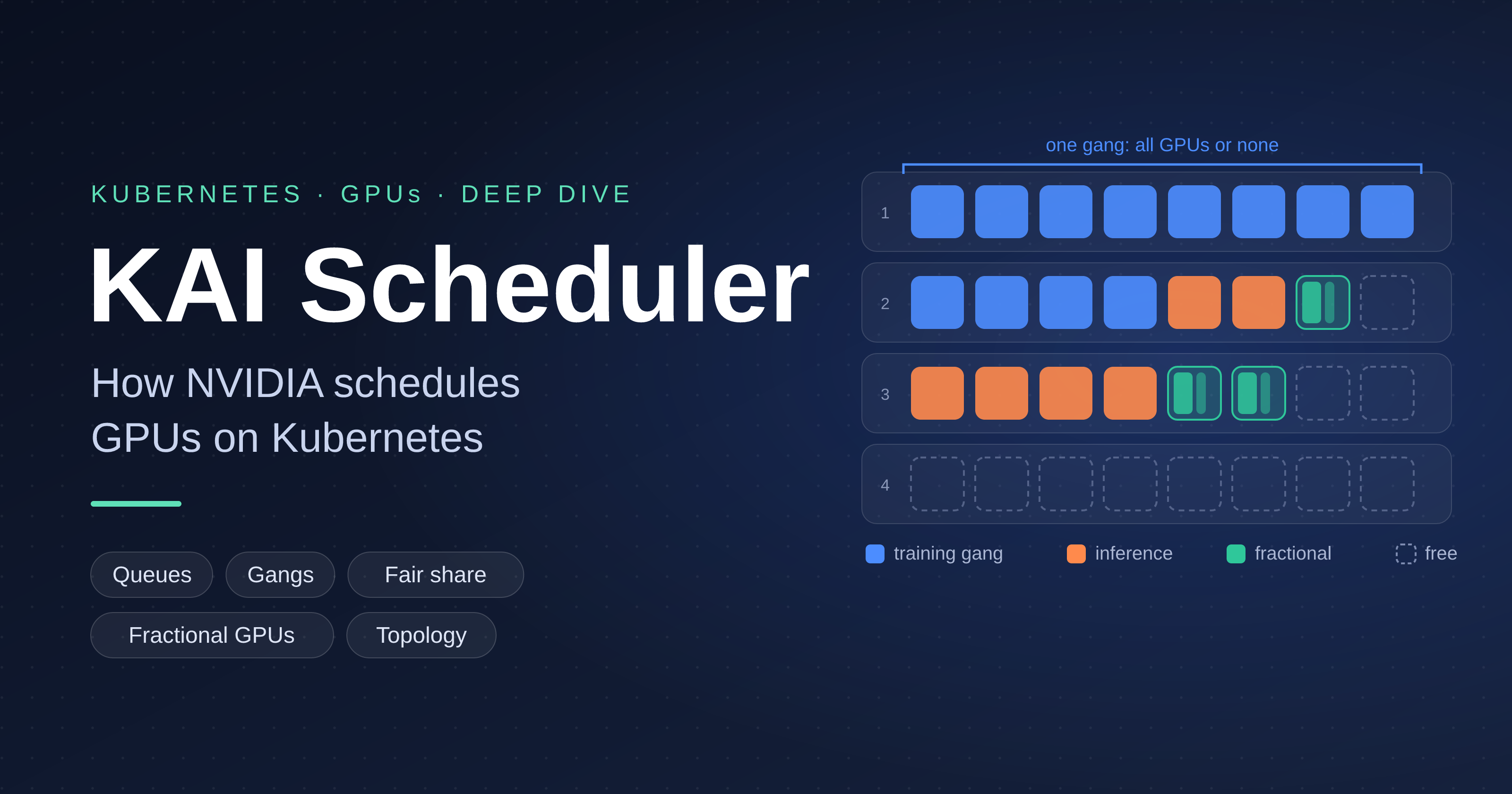
Why GPU clusters need a different scheduler The default kube-scheduler places one pod at a time, on one node, using a filter-and-score loop. That model is excellent for stateless microservices and wro
Responses
Markdown supported · ⌘↵ to post
Abhinav Sharma
Founder of Impact Gate. See who breaks before you change an API.
The one-pod-at-a-time model is exactly why distributed training jobs stall on a busy cluster: part of the gang gets placed, the rest pend, and the placed pods hold GPUs idle. Treating the whole job as one scheduling unit fixes the utilization problem, not just the placement one.