I work on Orke at BOMTOBE, a desktop workspace for Claude Code and Codex, so the human-handoff part of your fleet-tool idea is relevant to us. One reliability detail I’d make explicit: treat each request as a durable, task-linked item tied to the agent and session that asked it, with waiting/answered/withdrawn/stale states. If that session compacts or restarts, the answer should still route to the original request (or clearly ask to rebind) instead of disappearing in chat history. I’d also keep the top blocker distinct from lower-priority questions so a busy inbox still tells you what is holding up work. Would you prefer stale requests to expire automatically or require an explicit close?
Damiano Bianda
Full-stack developer: Nuxt, Vue, TypeScript, Python. Based in Ticino.
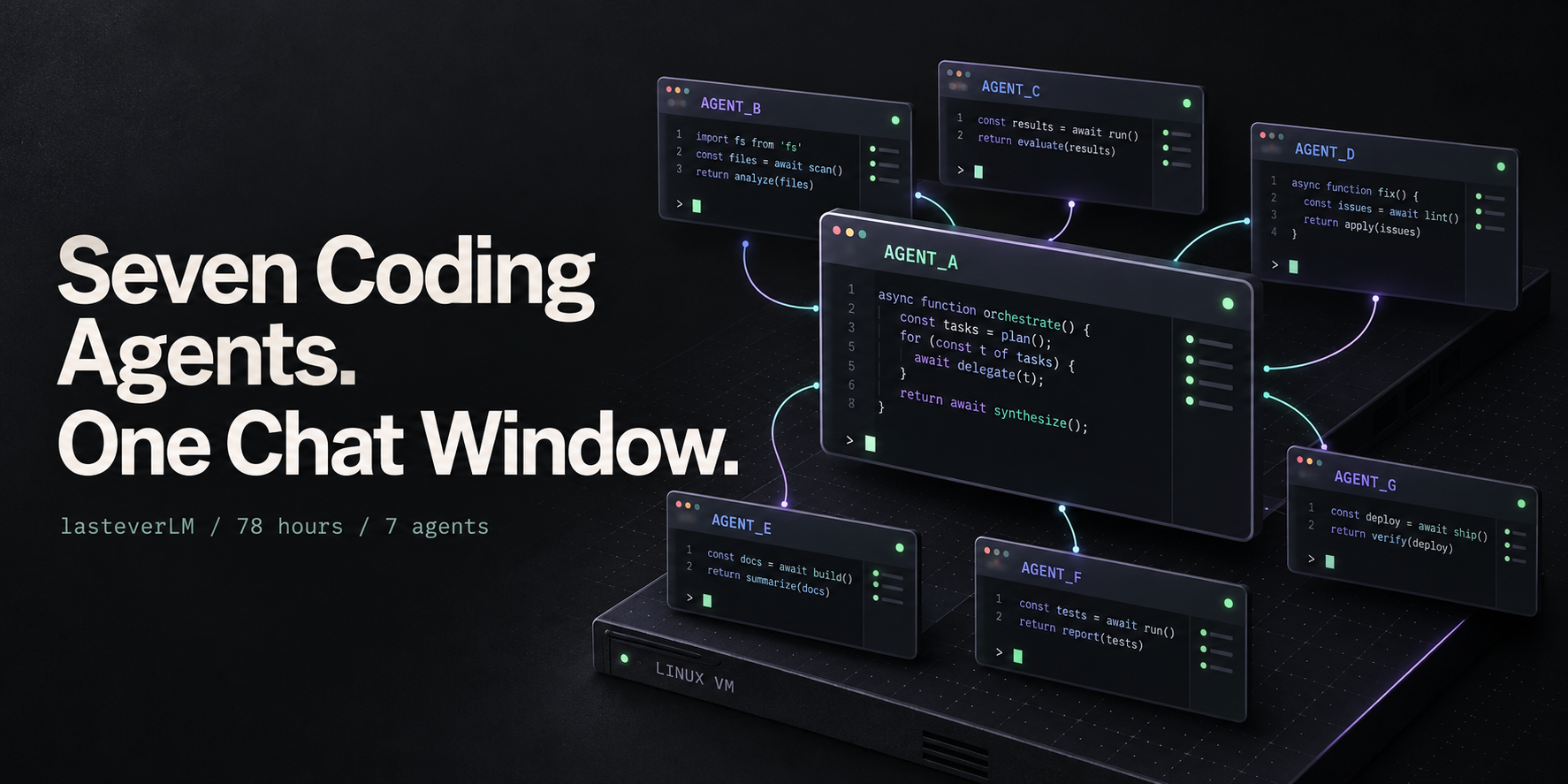
The part I'd want the sequel on: what did the coordination actually cost? Seven agents in parallel is the throughput win, but the bill usually arrives as context-syncing - every agent that touches the shared library needs to know what the ingestion agent decided an hour ago. You mention the agents talk to each other: did you route that through the head agent, or did pairs coordinate directly? And did you ever catch two of them quietly solving the same problem twice?