Spread vs Rest Operators in JavaScript
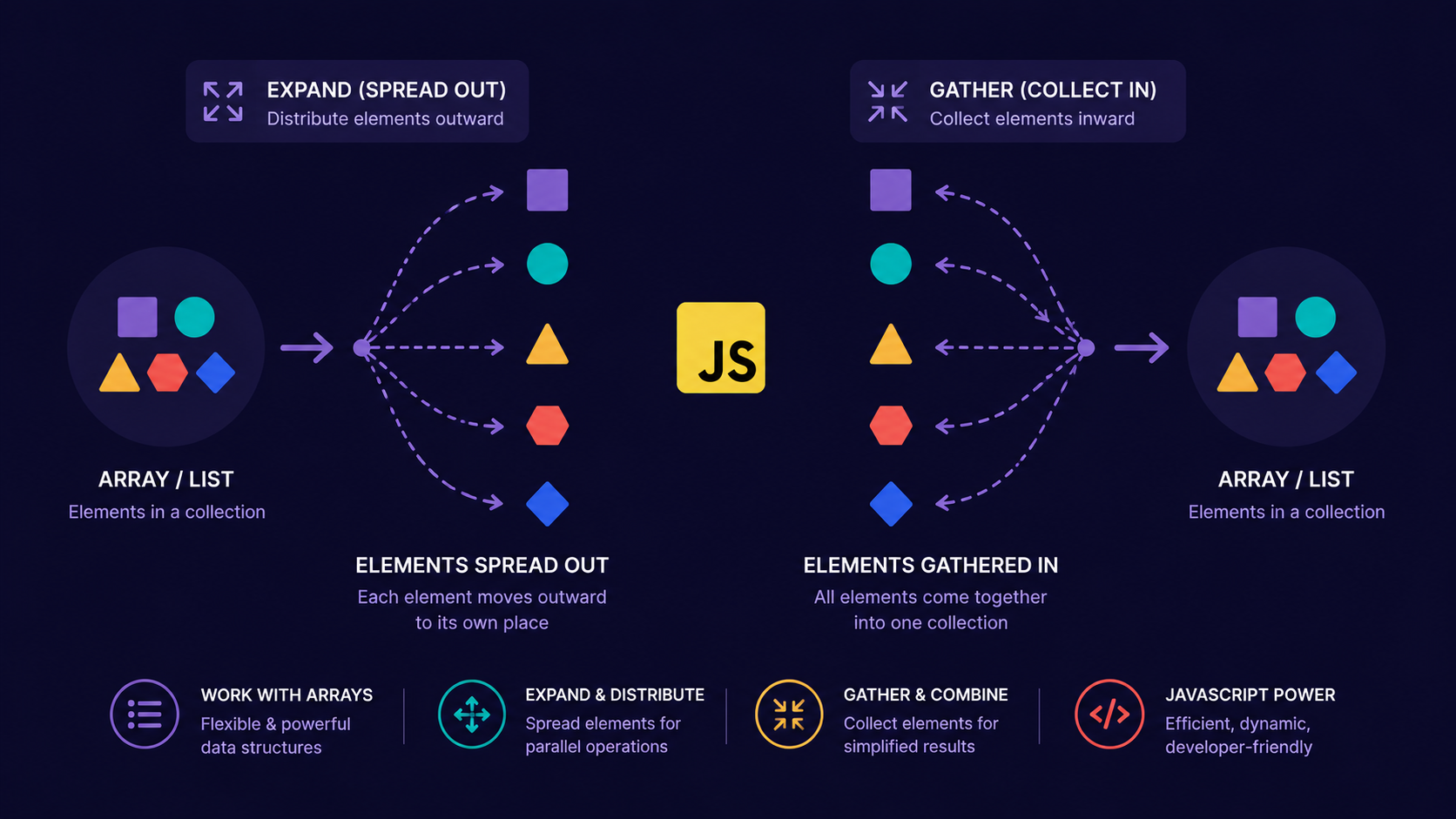
What Are Spread and Rest Operators in JavaScript? (And Why They Look Identical But Aren't) They Look the Same. Are They the Same Thing? You've probably seen ... show up in three completely different p
#javascript#webdev#web-development#programming-blogs#chaicode#chaicode-webdev-cohort-2026#chaiaurcode#chaicohort
Responses
Markdown supported · ⌘↵ to post
Good breakdown. One thing worth adding, because it catches people who use spread as a "copy" operator: {...obj} copies own enumerable properties only. The prototype is not carried over, so {...new Date()} gives you {} and {...someClassInstance} loses every method, since methods live on the prototype and not on the instance. Getters are evaluated at spread time and become plain values, and anything non-enumerable simply disappears.
And on the spread-as-arguments side: Math.max(...arr) is elegant right up until arr is large. Every element becomes a real argument, so on big arrays you hit RangeError: Maximum call stack size exceeded, and the exact threshold is engine-dependent rather than specified. arr.reduce((a, b) => Math.max(a, b)) is the boring version that never blows up.