The Comprehensive Technical Guide to Building AI-Ready Documentation Systems
In my previous article on From 71 to 100%: What It Took to Make the Rootstock Developer Portal More Agent-Ready,I shared what happened and what I learned while working on the Rootstock Developer Porta
#documentation#devportal#developer-experience#rootstock#docusaurus#technical-writing-1#ai-readiness#docs-as-code#docs-health
Responses
Markdown supported · ⌘↵ to post
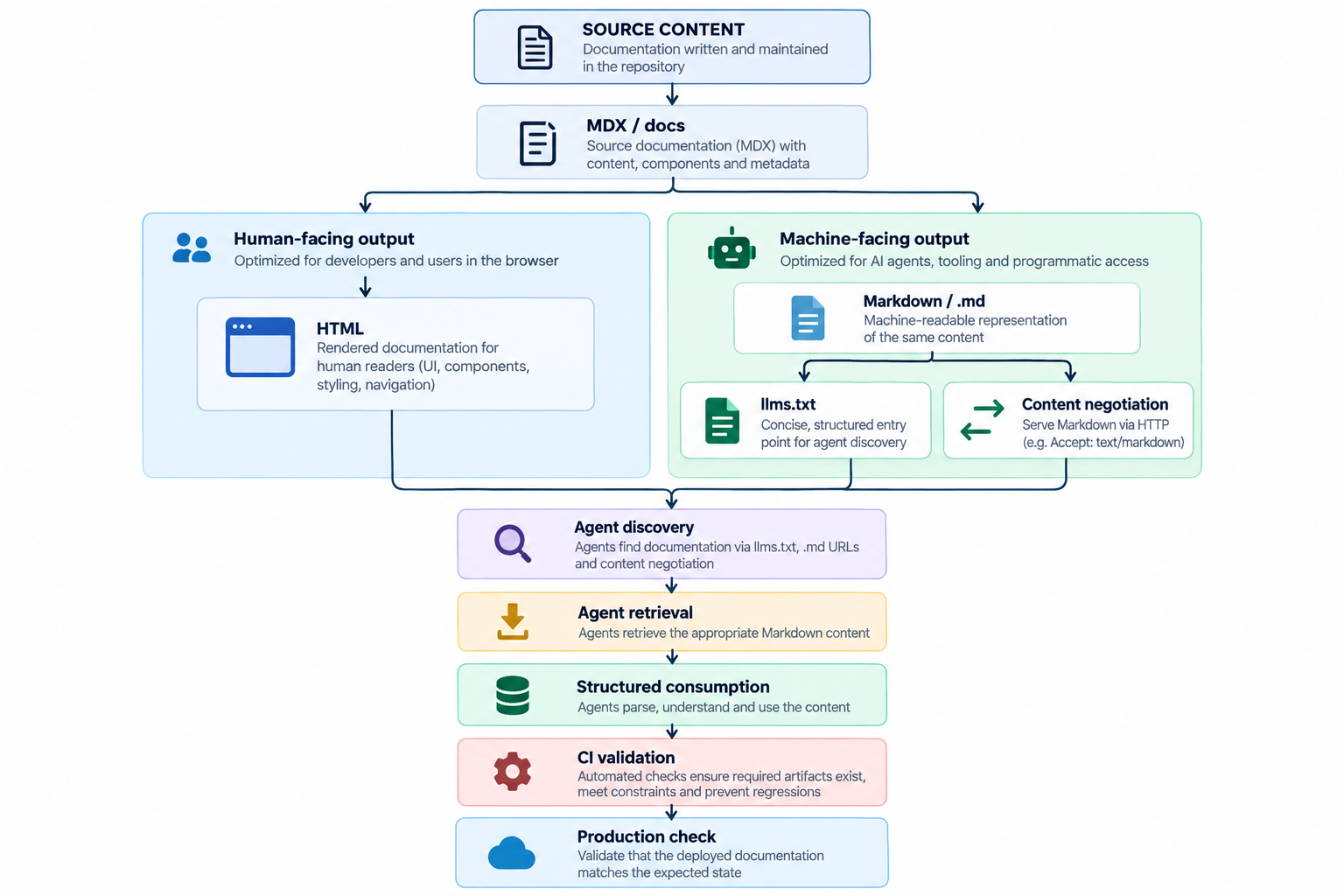
The biggest takeaway is that agent-ready documentation is a delivery-system problem as much as a content problem. A page can be accurate and well written, yet still be useless to an agent if it’s undiscoverable, truncated, or served in a representation the agent can’t consume reliably.
I especially like the move toward generating machine-friendly Markdown from the same source rather than maintaining a separate version. In production AI work at IT Path Solutions, that same principle matters for RAG systems and coding agents: keep one authoritative source, preserve structure and provenance during transformation, and validate the generated output in CI.
One additional check worth considering is freshness and parity between the human-facing and agent-facing versions. A build can pass every formatting check while an agent still receives outdated instructions. Treating content freshness and representation consistency as measurable release criteria would make the system even more reliable.