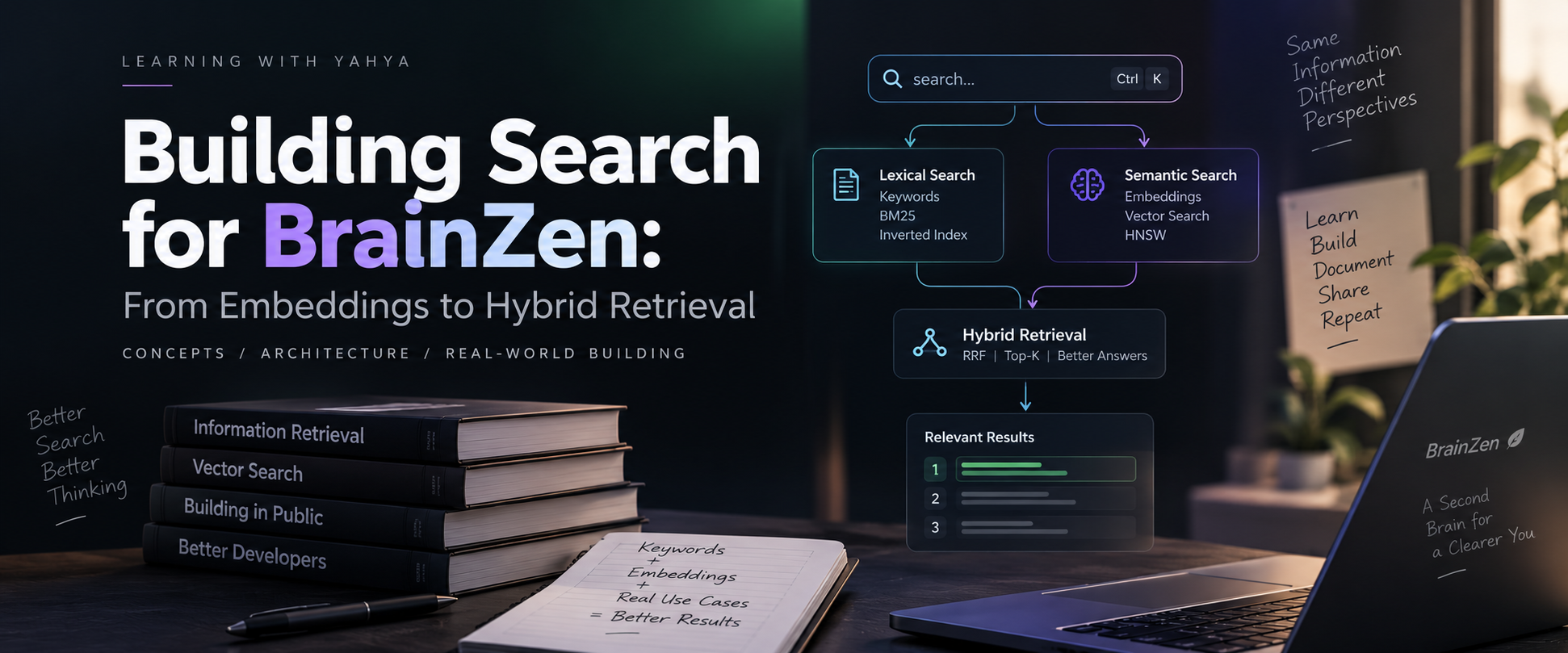
Building Search for BrainZen: From Embeddings to Hybrid Retrieval
Search initially seems simple: type a query, get matching content from the database. But once I started trying to make BrainZen—my second-brain app—actually understand what I'm looking for by meaning
#semantic-search#search#vector-search#information-retrieval#ai#embeddings#hybrid-search#nlp#mongodb-atlas
Responses
Markdown supported · ⌘↵ to post
The embedding lifecycle point is the one people skip and it bites twice. What you hit is staleness on edit, but the other failure shows up once re-embedding runs async: two edits close together can produce two jobs that finish out of order, so a stale embedding can overwrite the fresh one unless each job is tagged with the note's version or last-modified time and anything arriving out of order gets dropped. On the RRF side, where the metadata or permission filter sits matters just as much - filtering after RRF has already picked the top-K means you can end up serving fewer than K results whenever the top-ranked items get filtered out, since fusion already discarded everything outside that window. Filtering each retrieval path before fusion, or over-fetching before the final cut, avoids that particular way of quietly returning less than you promised.